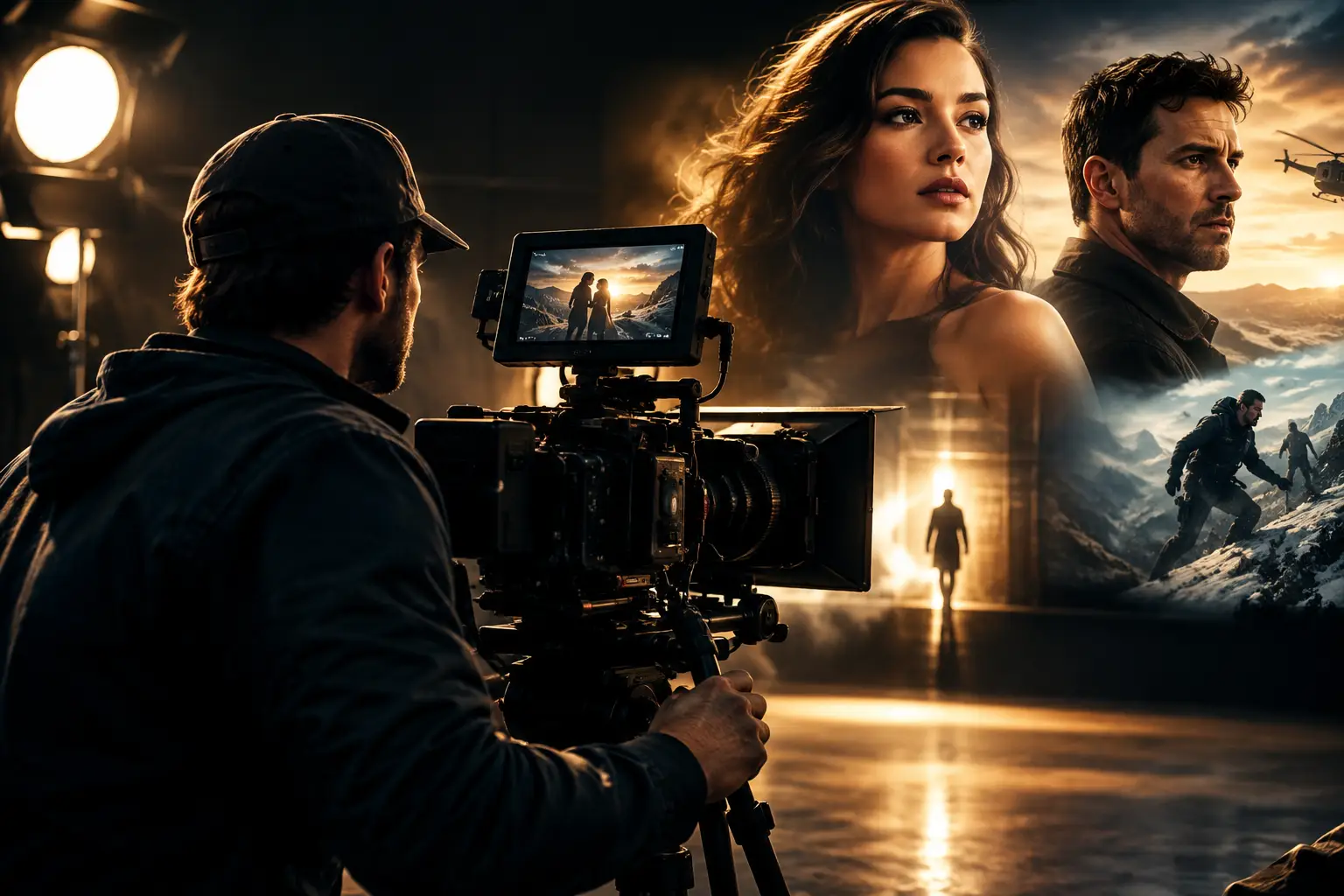
A screenplay can read brilliantly and still be difficult to sell in a room. A novel can have a devoted early audience yet leave publishers, producers, or investors asking one question: What does it feel like on screen? Cinematic movie trailer production answers that question with a finished visual asset built to establish tone, genre, character, and commercial potential in minutes.
For creators developing unproduced intellectual property, a trailer is not simply promotional material. It is a proof point. It gives collaborators something immediate to react to, share, and remember before a feature film, series, or adaptation exists.
What Cinematic Movie Trailer Production Is Built to Do
A strong trailer does not attempt to explain every plot turn. Its job is more focused: create emotional certainty that the audience wants more. Whether the underlying property is a screenplay, book, film concept, or investor-facing pitch, the trailer must make its world feel real enough to enter.
That requires more than attractive images. Hollywood-quality trailer work uses visual language with intent: an opening image that establishes the world, character moments that create identification, escalating stakes, sound design that drives momentum, and a final beat that leaves an impression. Every shot has a narrative assignment.
For a horror project, that may mean withholding the threat while making the danger unmistakable. For prestige drama, it may mean allowing a charged silence or a look between characters to carry the scene. For science fiction, the audience needs to understand the rules and scale of the world without receiving a presentation on its lore. The approach depends on genre, target audience, and the specific business objective behind the asset.
A book-to-film trailer aimed at readers may prioritize atmosphere and faithfulness to the story world. A movie pitch trailer for financiers may place greater emphasis on concept clarity, production value, audience positioning, and franchise potential. Both should feel cinematic. They are not necessarily cut the same way.
Why a Trailer Can Move a Project Forward
Development-stage projects often face a visibility problem. The writing may be complete, the concept may be compelling, and the creator may have a clear vision, but the material is still abstract to anyone who has not read it. A cinematic trailer converts pages into a common reference point.
That shift has practical value. A producer can use it to open a conversation around packaging. An author can use it to introduce a screen adaptation opportunity. A filmmaker can use it to communicate visual direction to prospective cast, crew, or backers. An entertainment entrepreneur can use it to test whether a premise generates immediate interest beyond a written deck.
The trailer also creates a higher standard of presentation. Rather than asking a decision-maker to imagine the finished experience from a logline alone, the creator can present a polished expression of the project’s identity. That does not replace a strong script, treatment, or pitch deck. It makes those materials easier to engage with because the emotional promise is already on screen.
There is a trade-off, however. A trailer cannot compensate for an unclear premise or a story without a distinct point of view. Visual execution can amplify a compelling concept, but it should not be used to disguise one that has not been developed. The most effective productions begin with honest creative strategy: identify what makes the project marketable, then build the trailer around that core.
The Elements of a Trailer That Feels Like a Movie
A Clear Creative Thesis
Before images are generated, edited, or scored, the production needs a thesis. This is the concise statement of what the audience should feel and understand when the trailer ends. It may be a revenge thriller with a mythic visual identity, a grounded family drama with awards-season weight, or a contained creature feature designed for a broad genre audience.
The thesis guides every creative decision. Without it, a trailer can become a collection of impressive shots that do not build toward anything. With it, the work gains a point of view.
Character Before Exposition
Audiences will follow a complex premise if they have an emotional way into it. That entry point is usually character. A protagonist’s fear, desire, flaw, or impossible choice gives the trailer human gravity.
This is especially important for screenplay visualizations and book adaptations, where there may be a temptation to showcase every major setting and secondary character. The better choice is often restraint. Select the character moments that communicate the central conflict, then let the larger world reveal itself around them.
Escalation, Rhythm, and Restraint
Trailer editing is architecture. The opening earns attention. The middle expands the premise and applies pressure. The final movement creates acceleration, surprise, or dread before the title reveal and closing button.
Not every trailer needs relentless speed. A psychological thriller may become more effective by slowing down at the right moment. A romance may need room for chemistry to register. A cinematic campaign asset should reflect the pacing promise of the eventual film, not imitate a trend that belongs to another genre.
Sound That Carries the Story
Music, dialogue selection, silence, impact effects, and transitions do significant narrative work. A single line of dialogue can frame the premise. A well-timed sound drop can make an image land harder than another musical rise ever could.
Sound also determines perceived scale. Polished mix decisions and deliberate score development help a trailer feel like a complete piece of entertainment rather than a visual montage. For investor or industry audiences, that finish matters because it signals care, control, and a serious understanding of the medium.
An AI-Powered Process Without a Generic Result
AI-powered filmmaking has changed what is possible for creators working before conventional production financing. It can support cinematic environments, character visualization, atmospheric sequences, and ambitious genre imagery without requiring a full physical shoot. That makes professional visual development more accessible to independent creators and early-stage projects.
But access is not the same as quality. The difference lies in art direction, storytelling judgment, consistency, and post-production discipline. AI-generated material must still serve a deliberate visual system. Characters need continuity. Locations need a coherent design language. Camera movement, lighting, wardrobe, and composition need to belong to the same cinematic world.
This is why a done-for-you production partnership matters. The client should not have to become a prompt engineer, editor, sound designer, and trailer strategist to get a credible result. A specialized studio manages the process from initial concept through the finished film, translating creative source material into a trailer that has purpose beyond visual novelty.
At Blackline Creative Group, that means pairing AI-powered production methods with a Hollywood-quality standard for development assets, including teasers, screenplay visualizations, proof-of-concept films, book-to-film trailers, and movie pitch trailers. The objective is always the same: make the property easier to see, feel, and champion.
What to Prepare Before Production Begins
A production team can work from a screenplay, manuscript, treatment, pitch deck, or detailed concept document. The strongest starting materials provide a clear logline, genre, tonal references, primary characters, central conflict, and the intended use of the trailer.
It also helps to establish what the trailer must accomplish. Is it designed to attract investors? Support a publishing launch? Help secure development interest? Present a director’s visual approach? Generate audience anticipation for a project already moving toward production? The answer affects runtime, narrative emphasis, callouts, and the balance between mystery and explanation.
Creative references are valuable, but they should clarify rather than constrain. Saying a project carries the tension of a contained survival thriller or the heightened color of a neo-noir can establish direction. Asking for a direct replica of another film’s identity usually produces weaker work. The goal is a trailer that feels market-aware and original enough to belong to the property.
Treat the Trailer as a Strategic Asset
A finished trailer becomes more useful when it is planned as part of a broader development and promotion strategy. A short teaser may create initial curiosity, while a longer proof-of-concept trailer can demonstrate the world, tone, and viability of the larger project. The right format depends on where the project is in its life cycle.
It is also worth considering the audience’s viewing context. An industry contact may watch with the sound low between meetings. A social audience may decide within seconds whether to keep watching. A private pitch presentation allows more time for atmosphere and story setup. One master asset can inform several uses, but the central version should be designed for its primary job.
The strongest cinematic trailers do not merely make a project look expensive. They make it legible. They tell the right audience what kind of experience is being offered and why that experience deserves attention.
When a story has only existed on the page, the right trailer gives it a pulse. That can be the moment a concept stops being potential and starts becoming a property people can picture on screen.