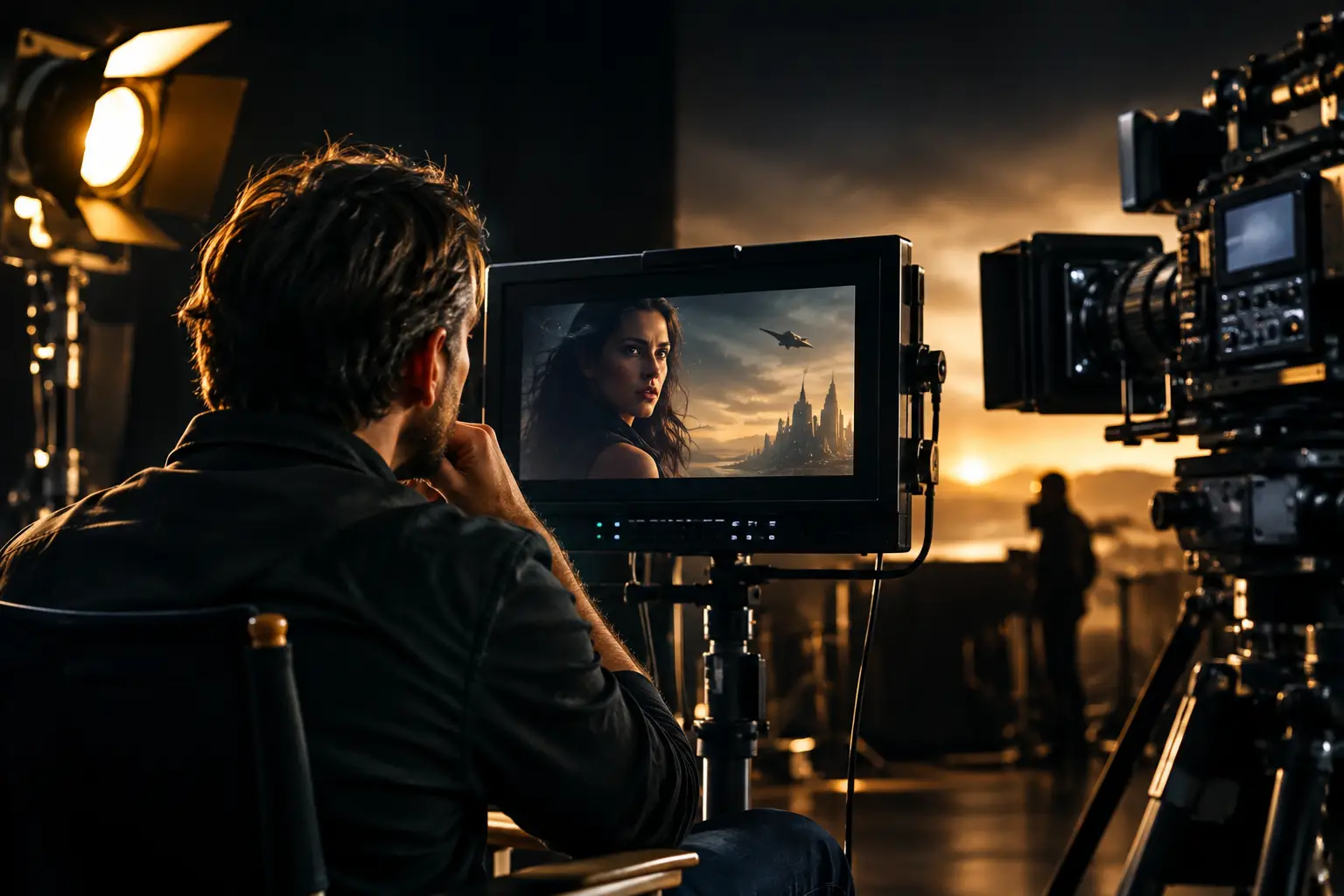
A strong story can be easy to describe and still difficult to sell. A film concept trailer service gives an unproduced screenplay, book, or original property the one thing a written pitch alone cannot provide: a cinematic experience of the world, tone, conflict, and audience promise.
For a producer considering a project, an investor evaluating its commercial potential, or a reader deciding whether a story feels like a film, the difference is immediate. They are no longer being asked to imagine the project from a logline or treatment. They can see the genre, feel the stakes, and understand what makes the concept worth pursuing.
That is the job of a concept trailer. It is not a condensed version of a movie that does not exist yet. It is a strategic proof-of-concept built to make the right people want to know what happens next.
What a Film Concept Trailer Service Actually Creates
A film concept trailer service transforms development-stage intellectual property into a finished trailer-format film. The source material may be a feature screenplay, television pilot, novel, book proposal, treatment, pitch deck, or even a well-developed story premise. The deliverable is a polished cinematic asset designed to communicate the project at a professional standard.
The best concept trailers establish four things quickly: genre, emotional tone, central conflict, and scale. A psychological thriller needs a different visual language than a prestige drama. A high-concept science-fiction property must make its rules and world feel credible without stopping to explain every detail. A romance needs chemistry and emotional tension, not simply attractive imagery.
This distinction matters because a trailer is not a presentation with moving pictures. It is storytelling under pressure. Every shot, line of dialogue, sound cue, reveal, and title card must earn its place by moving the audience closer to the core promise of the project.
A Hollywood-quality trailer can also be tailored to its intended use. A movie pitch trailer may prioritize concept clarity and market positioning for financiers or production partners. A book-to-film trailer may focus on atmosphere, character, and adaptation potential. A screenplay visualization may help a writer or producer test whether the story's world and tone translate visually before a larger production commitment is made.
Why Visual Proof Matters Before Production
Entertainment development is full of projects that sound compelling on the page but remain difficult for others to picture. A written script can convey a great deal, yet it asks every reader to direct the film in their own mind. That creates variation at precisely the stage when alignment matters most.
A cinematic proof-of-concept reduces that gap. It gives collaborators a shared reference point for the project's visual identity. Instead of debating whether a story feels grounded, elevated, commercial, darkly comic, or emotionally expansive, they can respond to a finished creative interpretation.
That does not mean a concept trailer replaces a screenplay, deck, or verbal pitch. It works alongside them. The screenplay supplies depth. The pitch deck provides context and business framing. The trailer supplies the emotional evidence.
For independent creators, this can change the quality of the conversation. An author approaching adaptation partners can present a world that already has visual authority. A screenwriter can make an original property more memorable in a crowded field. A producer can give prospective talent, investors, and strategic partners a faster way into the material.
The Difference Between a Mood Reel and a Proof-of-Concept
A mood reel is useful when a team needs references. It may combine clips, music, and imagery from existing films to indicate an intended style. It can communicate taste, but it cannot prove that a specific story works on screen.
A proof-of-concept trailer is built around the actual intellectual property. Its characters, setting, premise, and stakes belong to the project being pitched. It is designed to answer a more valuable question: what would this story feel like as a cinematic experience?
That difference affects every creative decision. A mood reel can borrow emotional momentum from famous scenes and recognizable actors. A concept trailer has to generate its own momentum. It must establish a compelling hook, create a credible world, and leave the audience with a clear reason to believe in the property.
There is also a practical distinction. Mood reels are often internal development tools. A professionally produced concept trailer can support outward-facing conversations, provided the project team is clear about what it represents. It is a proof-of-concept, pitch asset, or promotional visualization, not footage from a completed feature.
What the Production Process Should Include
A done-for-you process matters because most creators do not need another complex production task on their calendar. They need a creative partner capable of taking the material from concept through final delivery.
The process should begin with story intake and strategic alignment. This is where the production team identifies the project's genre, intended audience, tonal references, essential characters, visual opportunities, and primary business goal. A trailer built to attract financing will not necessarily be structured the same way as one built to support a book launch or adaptation discussion.
From there, the creative work moves into trailer development. That may include a trailer script, visual treatment, story structure, narration or dialogue approach, and a plan for the key cinematic moments. The goal is not to summarize every plot point. It is to select the elements that create intrigue while preserving the larger story's potential.
AI-powered production methods can make this stage more accessible than a conventional shoot, especially for projects that would otherwise require locations, cast, production design, visual effects, and extensive post-production resources. But technology alone does not create cinematic impact. The work still requires editorial judgment, film language, sound design, pacing, compositing, and a disciplined understanding of what viewers expect from a premium trailer.
At Blackline Creative Group, the objective is a finished visual asset that feels designed, not assembled. That means every sequence should support the same tonal world, and every trailer beat should build toward a meaningful final impression.
Creative Choices That Make or Break the Trailer
The strongest concept trailers are selective. They do not try to prove the project has everything. They prove that it has a distinct identity.
Character is often the first challenge. A trailer may only have time to establish one protagonist, one antagonist, and one charged relationship. Trying to introduce an entire ensemble can flatten the impact. When the material has a large mythology or multiple timelines, the trailer should lead with the most emotionally immediate entry point.
World-building requires similar restraint. A fantasy, historical epic, or science-fiction story may contain years of lore. The trailer does not need to explain all of it. It needs enough specific detail to make the world feel intentional and enough mystery to make viewers want access to more.
Pacing is another decisive factor. A trailer needs contrast: quiet tension before escalation, visual stillness before action, a question before a reveal. Constant intensity can become monotonous. The right rhythm creates anticipation and gives the final turn, title, or closing image more force.
Music and sound design should never be treated as decoration. They shape genre perception almost instantly. The same visual sequence can feel like elevated horror, romantic drama, action spectacle, or prestige mystery depending on its sonic treatment. For a pitch trailer, sound is often where polish becomes credibility.
When a Concept Trailer Is the Right Investment
A concept trailer is especially valuable when the project needs to cross from written development into visual conversation. This is common when an author is exploring adaptation, when a screenwriter is packaging an original property, or when a producer needs a stronger way to communicate a project's commercial and creative potential.
It can also help at moments of uncertainty. If a team is debating the tone of a screenplay, a visual proof-of-concept can expose whether the intended direction is landing. If an ambitious story world feels too abstract in a deck, a trailer can make it tangible. If a project is competing for attention in a crowded development environment, a cinematic asset can help it remain in the room after the meeting ends.
The trade-off is that a concept trailer requires decisive creative choices. It works best when the property has a clear premise and the client can identify the audience they want to reach. If the story is still changing at a foundational level, it may be wiser to resolve those questions before commissioning a finished asset.
The most effective next step is to identify the single reaction the trailer needs to create. Curiosity, urgency, emotional investment, confidence in the world, or belief in the project's market potential can all be valid goals. Once that reaction is clear, the trailer can be built to deliver it with purpose.