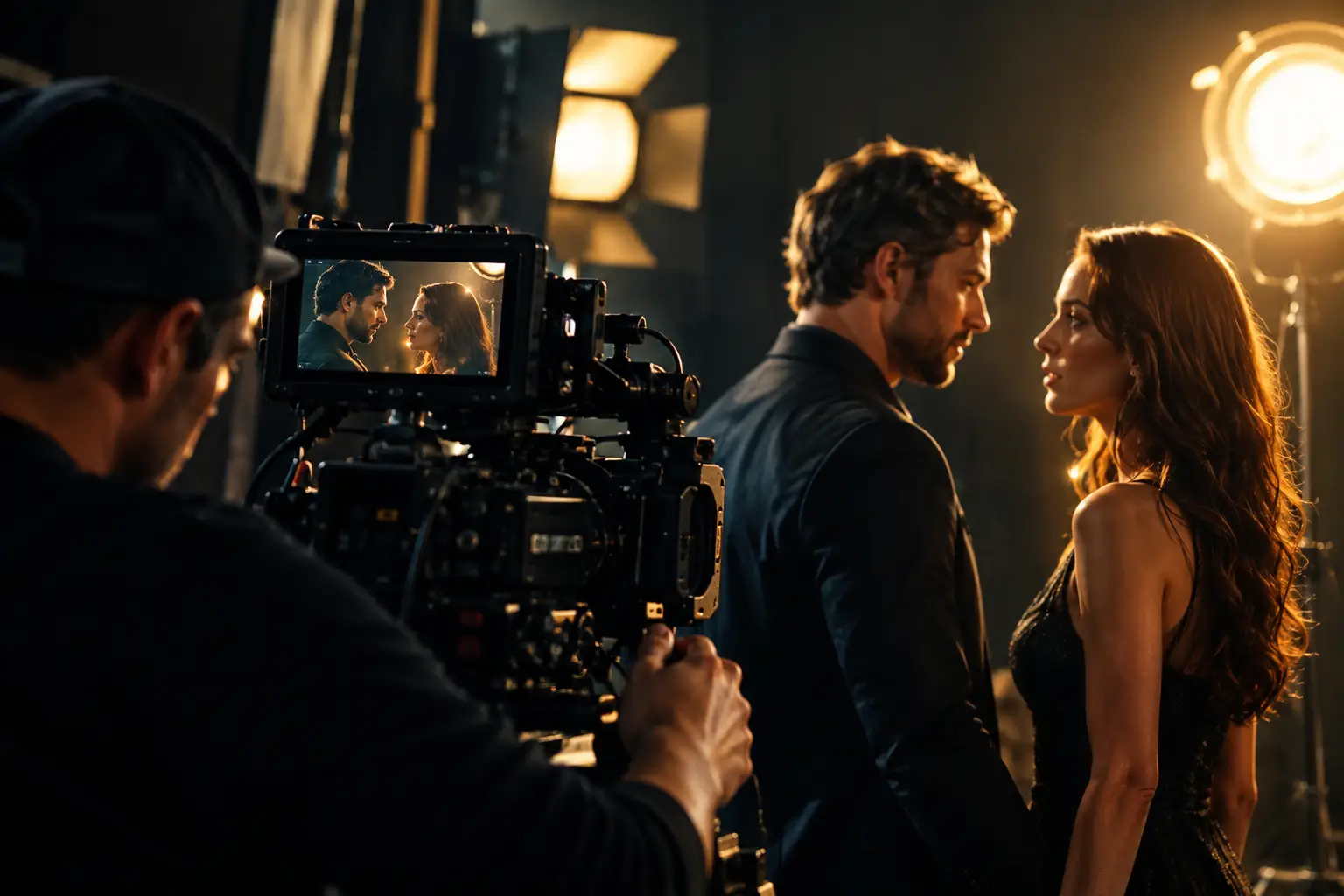
A screenplay can be brilliantly written and still ask too much of a reader’s imagination. A proof of concept film production gives the project a screen presence before the full feature, series, or adaptation exists. It lets producers, financiers, collaborators, and audiences feel the tone, see the world, and understand why this particular story deserves to move forward.
For creators developing narrative IP, that distinction matters. A pitch deck explains. A screenplay describes. A cinematic proof-of-concept makes the opportunity tangible.
What a Proof-of-Concept Film Is Designed to Do
A proof-of-concept film is a short, polished cinematic piece that demonstrates the creative and commercial case for a larger project. It is not simply a shortened version of the eventual movie. It is a strategic film asset built to answer the questions decision-makers ask early: What does this world look like? Who is the audience? Can the concept sustain a compelling emotional experience? Does the project have a distinctive identity in a crowded market?
The strongest pieces usually focus on one high-impact dramatic moment, a compelling character introduction, or a concentrated expression of the story world. A thriller may use a single escalating sequence to establish danger and tension. A fantasy adaptation may reveal its visual rules and emotional stakes through an intimate scene within an expansive world. A drama may center on the moment a protagonist makes the choice that defines the larger narrative.
The goal is not to explain every plot point. It is to create conviction.
That makes a proof-of-concept especially useful when the project is ambitious, visually specific, or difficult to communicate in a verbal pitch alone. If your concept depends on a particular atmosphere, an original setting, elevated genre execution, or a major tonal turn, showing that experience can carry more weight than pages of description.
Why Proof of Concept Film Production Changes the Pitch
Development decisions are partly analytical, but they are also emotional. A producer may understand the logline and still struggle to picture the finished film. An investor may appreciate the market category but need to see evidence that the creative vision has a real cinematic point of view. A publisher considering screen rights may want confidence that a book can translate into a visual property.
A well-produced proof-of-concept closes that gap. It gives stakeholders a shared reference point, which makes conversations about casting, budget scale, audience positioning, packaging, and distribution more productive. Instead of debating an abstract idea, the room is responding to a film.
It can also protect the intent of the material. Scripts are interpreted differently by every reader. A cinematic proof-of-concept establishes the project’s visual language, pacing, emotional temperature, and genre promise early. That is valuable when several creative partners are entering the process or when a creator needs to make sure the central vision is not diluted during development.
There is a practical marketing benefit as well. A strong short film or cinematic teaser can support pitch meetings, producer outreach, crowdfunding, early audience building, book promotion, and investor presentations. One asset can serve several moments in the life of a project, provided it is built with a clear strategic role from the beginning.
Choose the Right Scope, Not the Biggest Scope
The common mistake is trying to put the entire movie into three minutes. That usually produces compressed exposition, too many characters, and visuals that have no time to land. A proof-of-concept earns attention through specificity, not volume.
Start with the question the film must answer. If the challenge is demonstrating that a historical romance has prestige appeal, the piece may need production design, period atmosphere, and a charged character exchange. If the challenge is proving that a science-fiction premise can feel grounded rather than generic, the film may need one believable human scene set against the larger concept. If the project is based on a book, the best choice may be the scene that captures why readers connect with the property in the first place.
Scope should follow the purpose. A short proof-of-concept can be more persuasive than a longer one when it leaves the viewer wanting the feature. Conversely, a project built around a highly original world may need additional runtime to establish the rules. There is no universal ideal length. The right length is the one that delivers a complete emotional turn without losing momentum.
The Elements That Make It Feel Cinematic
Hollywood-quality is not a matter of adding spectacle to every frame. It comes from disciplined creative choices that make every image feel part of the same film. The concept, script, visual direction, sound, edit, and performance all need to support one clear promise to the viewer.
The opening seconds are particularly important. In a pitch environment, attention is limited. The film should establish an immediate question, a striking image, or an emotional disturbance that invites the viewer forward. From there, the story needs escalating stakes and a deliberate ending - often a reveal, reversal, or final image that points toward the larger project.
Sound is frequently the difference between footage and cinema. Music, sound design, silence, texture, and impact cues direct emotion as strongly as the image does. A proof-of-concept may be brief, but it should feel authored at every level.
AI-powered production expands what can be visualized without requiring a conventional full-scale shoot. It can help create environments, cinematic imagery, concept-driven sequences, and production value that would otherwise be out of reach for an independent project. But technology does not replace taste. The work still requires a strong screenplay foundation, intentional art direction, continuity, editorial judgment, and an understanding of what makes a scene emotionally credible.
A Done-for-You Production Process
The most efficient proof-of-concept process begins before images are created. First, the production team identifies the objective: secure meetings, attract financing, sell adaptation potential, test audience interest, or establish a visual blueprint for the larger film. That objective shapes the creative approach.
Next comes story selection and script development. The source material may be a screenplay, novel, treatment, pitch deck, or even a fully developed concept. The task is to isolate the most filmable, persuasive part of the property and write it as a self-contained experience. This is where many projects gain clarity. The right scene often reveals the true center of the larger story.
Visual development follows. Character design, environments, camera language, lighting, color, costumes, and reference points are organized into a coherent cinematic direction. This stage is not decoration. It determines whether the finished asset feels like a collection of attractive images or a believable piece of a larger screen world.
Production and post-production then bring the piece together through image creation, motion, voice or performance elements where appropriate, editing, music, sound design, and finishing. A done-for-you studio model matters here because the creator is not left coordinating separate writers, artists, editors, and audio vendors. Blackline Creative Group manages the process from the initial concept to a finished cinematic asset designed for the project’s real-world purpose.
What to Prepare Before Production Begins
You do not need a locked feature screenplay to commission a proof-of-concept, but stronger source material leads to faster, more precise creative decisions. A concise logline, a synopsis, character descriptions, and a clear statement of the project’s intended audience are often enough to begin shaping a direction.
It also helps to define what must remain non-negotiable. Perhaps the protagonist’s voice is the heart of the material. Perhaps the setting has an iconic visual element readers already recognize. Perhaps the project must feel elevated, raw, romantic, frightening, or grounded. Share those priorities early, along with comparable films or series that communicate the desired level of intensity or polish.
At the same time, leave room for the proof-of-concept to be its own film. The most effective piece is faithful to the core IP without becoming trapped by every detail of the full narrative. It is a persuasive expression of the project, not a substitute for the complete work.
Know What Success Looks Like
A proof-of-concept does not guarantee financing or a greenlight. Those decisions also depend on attachments, budget, market conditions, rights, distribution strategy, and relationships. What it can do is make the project easier to champion. It gives a producer something they can forward. It gives an author something that demonstrates adaptation potential. It gives a filmmaker a visual statement of intent.
Success may look like stronger pitch meetings, more productive calls, a clearer development path, or a collaborator finally understanding the project the way you do. For some creators, the film becomes the first public-facing expression of a new story world. For others, it stays private and becomes the asset that opens the right door.
The most valuable proof-of-concept is not the one that tries to prove everything. It is the one that makes the right viewer want to see what happens next.